
Rethinking Resources
We can’t go on like this

Humanity is faced with a growing set of interrelated challenges. Problems like climate change, resource depletion, pollution, and growing inequality aren’t isolated failures. They’re symptoms of systems that were designed to deliver certain outcomes, while also producing effects that were undesired and often quite problematic. Whether those problems were missed, understood and accepted, or left for others to deal with, the result is the same. We’ve got a real mess to deal with, and the longer it takes to start making meaningful progress, the more pain we’re likely to deal with in the transition, and the harder it will be to get back to stable circumstances.
Rethinking Resources is Morph’s space for exploring circular economy ideas and the frameworks that help make sense of complex systems, and for thinking through what it takes to change them. It’s centered on ideas from systems thinking, circular economy, and systemic design, which we use to help understand how things work, how we might like to change them, and how we might intervene effectively.
The ideas shared here are for people who are curious and willing to engage with these mounting challenges. We’ll start with the foundations and build from there.
What is the Circular Economy?
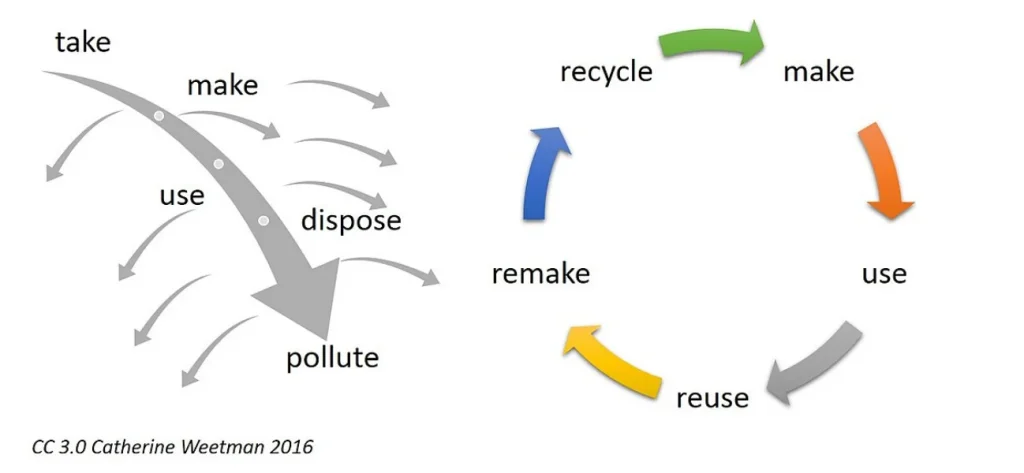
The circular economy is an alternative to the linear ‘take, make, dispose’ model that dominates most of today’s production and consumption. In a linear economy, resources are extracted, turned into products, used, and then discarded. This often happens after a brief, single use. Value flows in one direction and ends in a landfill. (We like to think of them as unpleasant gold mines.)
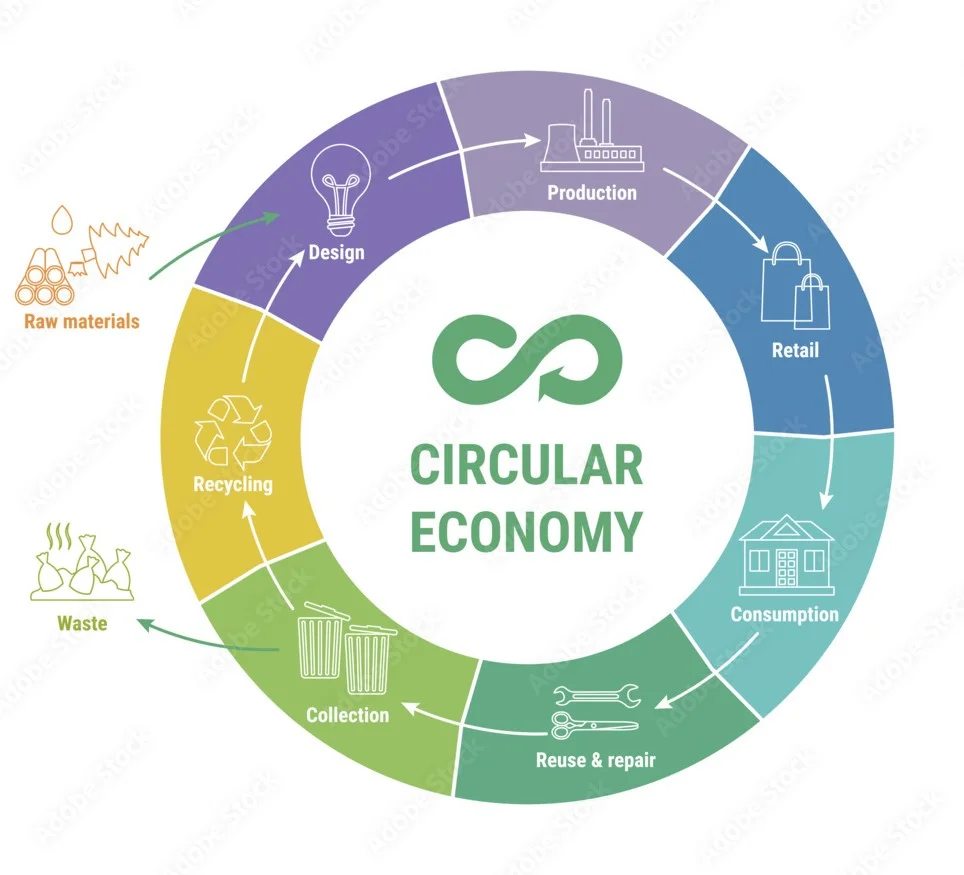
A circular economy is designed to keep materials in use for as long as possible. Rather than treating waste as an endpoint, it treats it as a resource that’s been mischaracterized as having lost its value. The problem stems from systems that have been built over many years, changing human behavior and perspectives, so that a container that was made to deliver something like food or water, is viewed as having served its purpose and surrendered its worth once its contents are consumed. At that point, it might get recycled, but most of our waste goes to landfill. In the circular economy, the goal is to eliminate that loss by designing products that can be repaired, reused, remanufactured, or recycled, and by building the systems that make that possible.
At Morph, the circular economy isn’t a idea we espouse while regularly compromising with our choices and actions. Instead, it’s the reason we exist. Every product we make starts as a resource someone else was done with. We work to find ways to make it useful again.
What is Systems Thinking?
Systems thinking is a way of working to understand complex systems. It helps us look at the interconnected nature of things by paying attention to things like parts and wholes, connections, relationships, patterns, and feedback, rather than focusing on isolated events or individual parts of a system
Most of us are trained to solve problems by breaking them down. You identify the cause, fix it, and move on. That works well for straightforward problems with clear causes and effects. For complex ones, where causes and effects can be separated in time and space, feedback loops can amplify or dampen change, and making change to one part of a system often creates new problems somewhere else, we need a different approach.
Systems thinking asks different questions. Instead of looking for the direct cause of a problem, we look for things like patterns to help us understand what’s contributing to undesired outcomes. Instead of looking for the answer, it looks for the structure that’s generating the behavior and then ways in which it might be changed to move towards desired outcomes.
What is Systemic Design?
Systemic design pairs the methods and mindset of design with the insights uncovered by systems thinking.
Where systems thinking helps us understand how a system works, systemic design helps us figure out how to intervene in it. The work is inherently collaborative. The people most affected by a system are also the ones who understand it most deeply, and systemic design treats their knowledge and participation as essential inputs, not afterthoughts. Arnstein’s Ladder is a great model for thinking about this.
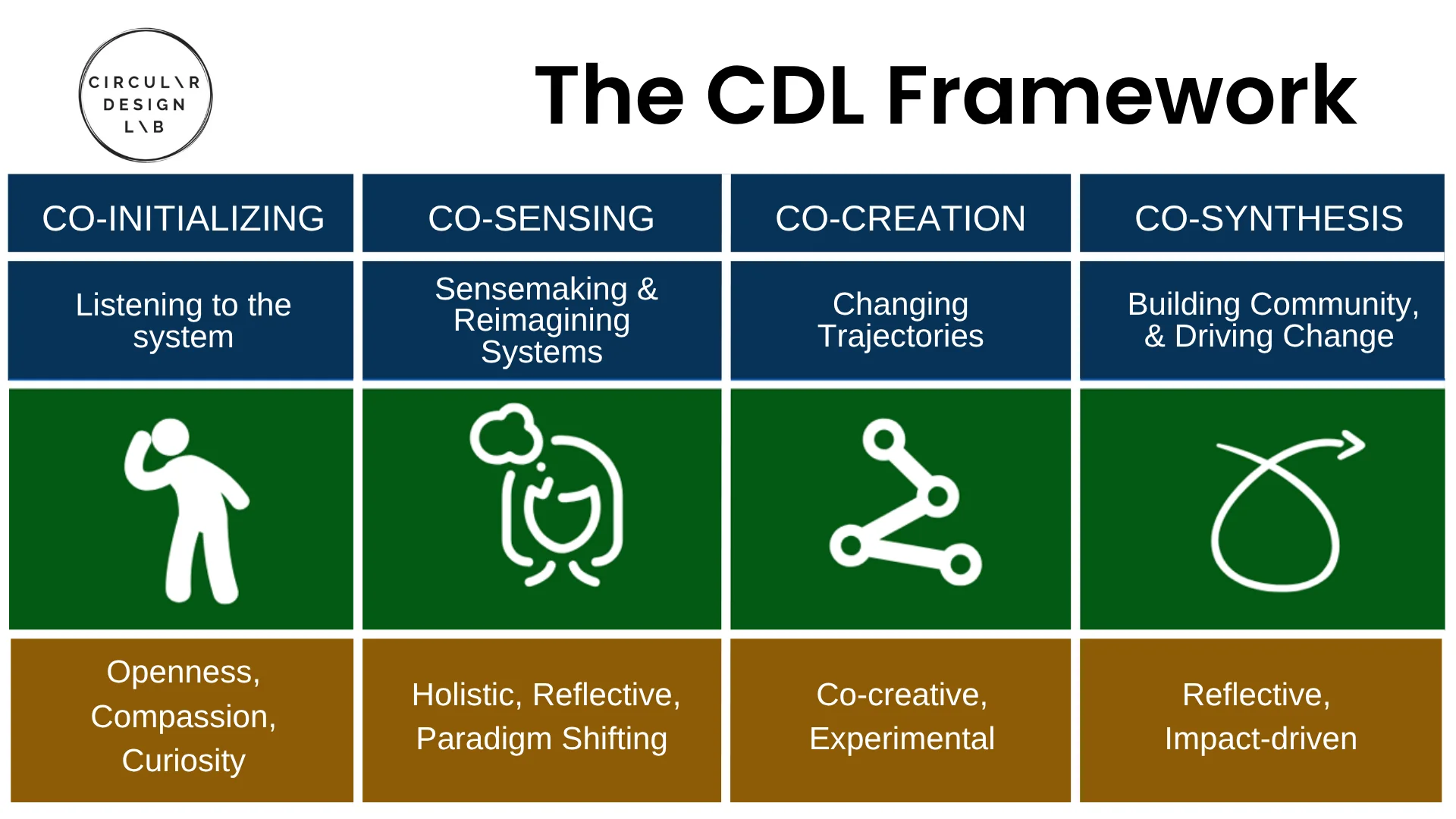
The Circular Design Lab, which Morph’s founder co-founded in Bangkok, used systemic design methods to bring communities together around some of Southeast Asia’s most pressing environmental and social challenges. That work continues to inform how we think about change at Morph.

More soon…
We’ll be adding deeper resources on circular economy, systems thinking, and systemic design, as well as pieces on climate change, resource use, environmental management, and inequality. If there’s a topic you’d like us to cover, let us know.